Why Community Marketing Is Replacing Traditional Advertising in 2026
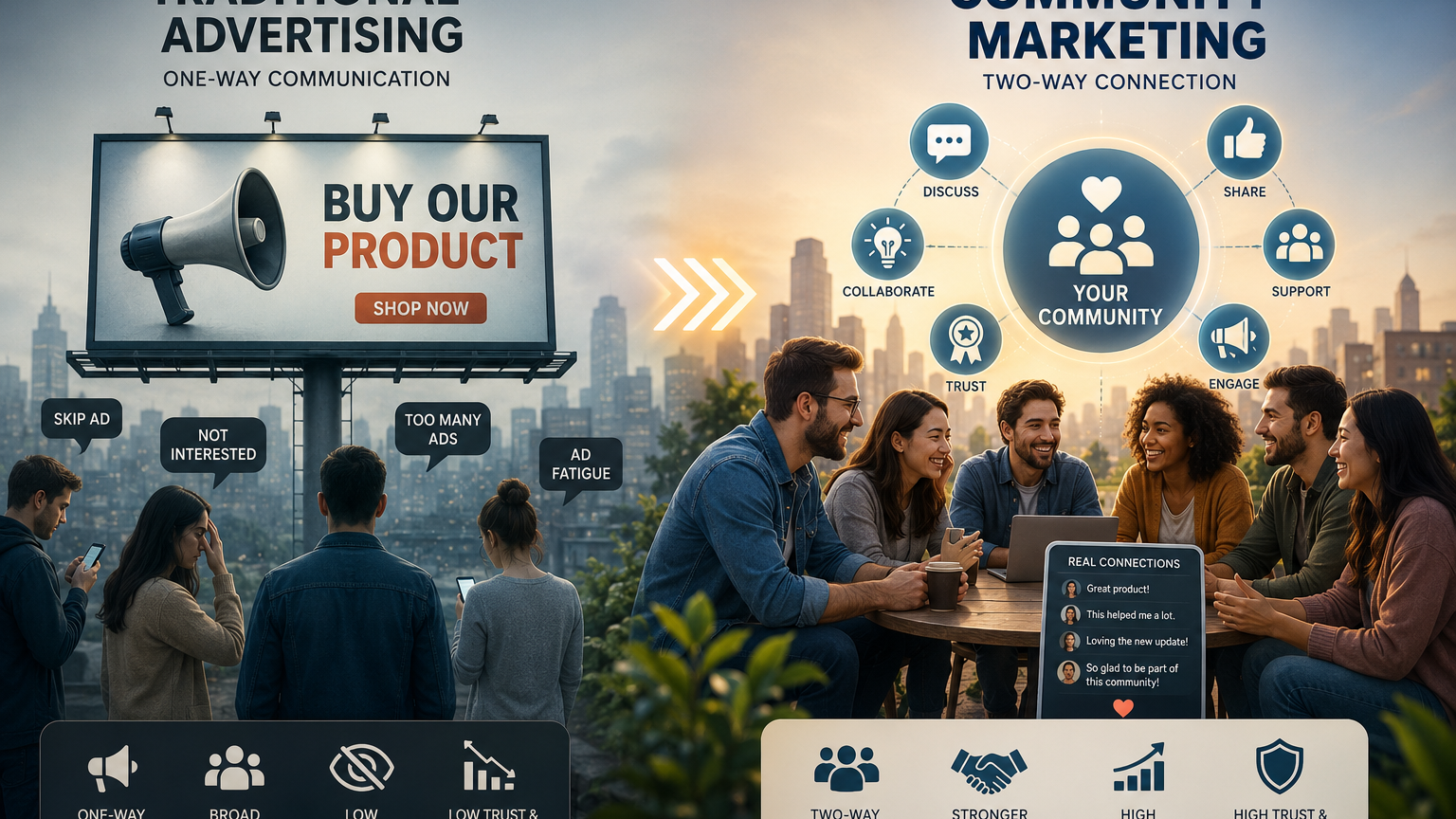
For decades, businesses relied heavily on traditional advertising to attract customers. Television commercials, newspaper ads, radio promotions, and digital display campaigns were the primary ways brands communicated with their audiences.
However, consumer behavior has changed dramatically in recent years. Customers are increasingly seeking authentic interactions, peer recommendations, and meaningful engagement rather than one-way promotional messaging. Modern customers no longer want to be sold to—they want to connect, engage, and belong. This shift has led to the rise of community marketing, a strategy focused on building meaningful relationships rather than simply promoting products.
As trust becomes one of the most valuable assets in marketing, brands that create strong communities are achieving higher engagement, stronger customer loyalty, and better long-term growth than those relying solely on traditional advertising.
In 2026, community marketing is no longer just a trend—it's becoming a core business strategy for brands looking to stay competitive in an increasingly digital world.
What Is Community Marketing?
Community marketing is a strategy that focuses on creating and nurturing a group of people who share common interests, values, or goals related to a brand.
Instead of pushing promotional messages, businesses encourage conversations, collaboration, and customer participation.
A community can exist through:
● Social media groups
● Online forums
● Brand ambassador programs
● Discord communities
● Facebook groups
● Membership platforms
● Customer networks
● User-generated content campaigns
The goal is simple: transform customers from buyers into active participants and advocates.
Why Traditional Advertising Is Losing Effectiveness
Consumers are exposed to thousands of advertisements every day. As a result:
● Ad fatigue is increasing
● Trust in advertisements is declining
● Banner blindness is becoming more common
● Ad blockers are widely used
● Consumers prefer recommendations from real people
Modern audiences value authenticity more than promotional messaging.
Research consistently shows that people trust recommendations from friends, customers, online communities, and content creators far more than traditional advertisements.
This change is forcing businesses to rethink how they build relationships with customers.
The Rise of Trust-Based Marketing
Community marketing thrives because trust has become a key factor in purchasing decisions. Customers are more likely to engage with brands that encourage genuine interaction and provide value beyond products or services.
Today's customers want brands to earn their attention rather than buy it. Community marketing works because it focuses on:
Authentic Conversations
Customers can interact directly with brands and other community members.
Shared Experiences
People enjoy connecting with others who share similar interests.
User Participation
Communities encourage members to contribute ideas, feedback, and content.
Long-Term Relationships
Instead of a one-time purchase, brands build ongoing engagement.
When customers feel connected to a community, they are more likely to remain loyal and recommend the brand to others.
Key Benefits of Community Marketing
1. Increased Customer Loyalty
Strong communities create emotional connections. Customers who feel valued are more likely to:
● Stay loyal longer
● Make repeat purchases
● Support new product launches
● Recommend the brand to others
Loyal customers often become a brand's most effective marketers.
2. Higher Engagement Rates
Traditional advertisements are often passive. Community marketing encourages:
● Discussions
● Comments
● Feedback
● Poll participation
● Content sharing
This leads to significantly higher engagement compared to standard promotional campaigns.
3. More User-Generated Content
Community members naturally create content such as:
● Reviews
● Testimonials
● Photos
● Videos
● Social media posts
User-generated content builds credibility because it comes from real customers rather than the brand itself.
This type of content often performs better than traditional advertising.
4. Improved Customer Insights
Communities provide direct access to customer opinions. Brands can learn:
● What customers want
● Common pain points
● Product improvement opportunities
● Emerging trends
These insights help businesses make smarter decisions and improve customer experiences.
5. Stronger Brand Advocacy
Satisfied community members often become brand ambassadors. They voluntarily:
● Recommend products
● Answer questions
● Share experiences
● Defend the brand
● Invite new members
This creates powerful word-of-mouth marketing that traditional advertising cannot easily replicate.
How Community Marketing Builds Brand Trust
Trust has become one of the most important factors influencing purchasing decisions. Community marketing builds trust through:
Transparency
Brands communicate openly with customers.
Consistency
Regular interaction strengthens relationships.
Accessibility
Customers can engage directly with the business.
Social Proof
Positive experiences shared by community members influence others.
When customers see real people discussing positive experiences, they feel more confident in their purchasing decisions.
Popular Community Marketing Channels in 2026
Facebook Groups
Still one of the most effective platforms for niche communities.
Discord Servers
Growing rapidly among technology, gaming, education, and startup communities.
LinkedIn Communities
Popular for B2B networking and professional discussions.
Reddit Communities
Ideal for organic discussions and feedback gathering.
Brand-Owned Communities
Many companies are now creating private platforms where customers can connect directly.
The most successful brands use multiple channels to strengthen customer engagement.
Best Practices for Building a Successful Community
Provide Value First
Focus on helping members rather than selling products.
Encourage Participation
Create discussions, polls, challenges, and events.
Reward Community Members
Recognize active contributors and loyal supporters.
Listen to Feedback
Use community insights to improve products and services
Stay Consistent
Regular engagement is essential for community growth.
The strongest communities are built around shared value, not constant promotion.
The Future of Community Marketing
As digital platforms continue evolving, communities will become even more important. Emerging trends include:
● AI-powered community management
● Personalized member experiences
● Creator-led brand communities
● Exclusive membership programs
● Interactive virtual events
● Community-driven product development
Brands that invest in community-building today will be better positioned to create long-term customer loyalty and sustainable growth.
As artificial intelligence continues to personalize digital experiences, communities will become even more valuable as spaces for authentic human interaction and relationship-building.
Conclusion
Community marketing is replacing traditional advertising because consumers are seeking authentic relationships, meaningful engagement, and trusted recommendations rather than constant promotional messages.
By building strong communities, brands can increase customer loyalty, generate valuable user-generated content, improve engagement, and create powerful word-of-mouth marketing
In 2026 and beyond, the businesses that succeed will not simply be the ones with the biggest advertising budgets. They will be the brands that create genuine connections, foster active communities, and make customers feel like valued members rather than just buyers. In the future of marketing, community will not simply support growth—it will drive it.
Category: Digital Marketing
Author: Techstas Research
Read time: 5 min read
Community marketing is transforming how brands connect with customers. Instead of relying solely on traditional advertising, businesses are building engaged communities that drive trust, loyalty, and long-term growth. Learn why community-d...