
Why Community Marketing Is Replacing Traditional Advertising in 2026
Community marketing is transforming how brands connect with customers. Instead of relying solely on traditional advertising, businesses are building…

AI-powered search is reshaping the future of SEO. Learn how businesses can adapt with high-quality content, topical authority, structured data, and user-focused strategies to improve visibility in both traditional and AI-driven search results in 2026.
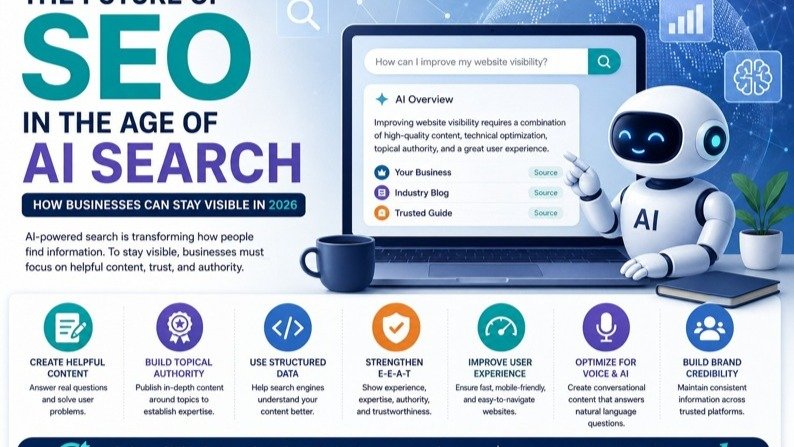
Search is undergoing one of its biggest transformations since the launch of modern search engines. For years, businesses focused on ranking higher on search engine results pages by optimizing keywords, building backlinks, and improving website performance.
Today, artificial intelligence is reshaping how people discover information online. AI-powered search experiences now provide direct, conversational answers instead of simply displaying a list of web pages. This shift is changing how users interact with search engines and how businesses approach digital visibility.
Instead of competing only for rankings, brands must now focus on becoming trusted sources of information that AI systems can understand, verify, and confidently reference.
This article explores how AI search is changing SEO, why traditional optimization alone is no longer enough, and how businesses can prepare for the future of search.
AI-powered search combines traditional search technology with large language models to deliver more natural, comprehensive answers to user queries.
Instead of typing short keyword phrases, users increasingly ask complete questions such as:
● What is the best digital marketing strategy for small businesses?
● How can AI improve customer service?
● What are the latest SEO trends in 2026?
AI systems analyze information from multiple trusted sources before generating a summarized response.
This means content must not only rank well but also demonstrate accuracy, expertise, and trustworthiness.
Traditional SEO remains important, but search optimization is becoming much broader. Previously, success depended heavily on factors such as:
● Keyword optimization
● Backlink building
● Meta descriptions
● Technical SEO
● Website speed
These elements still matter, but AI-powered search introduces new priorities. Modern search engines increasingly evaluate:
● Content quality
● Topic expertise
● Entity recognition
● User intent
● Information accuracy
● Structured data
● Brand credibility
The goal is no longer simply ranking pages—it is becoming a trusted source of knowledge.
People are searching differently than they did just a few years ago.
Instead of entering fragmented keywords, users now ask detailed questions in natural language.
Examples include:
● How do I improve my website's visibility in AI search?
● What are the benefits of structured data?
● Which SEO strategies still work in 2026?
Content that directly answers these types of questions is more likely to perform well in AI-driven search experiences.
Creating articles that address real user problems is becoming more valuable than simply targeting exact-match keywords.
High-quality content has become one of the strongest signals for search visibility. Businesses should focus on creating content that:
● Solves real problems
● Provides practical advice
● Uses clear, easy-to-understand language
● Includes accurate and current information
● Demonstrates genuine expertise
Rather than publishing large volumes of content, brands benefit more from creating comprehensive resources that fully answer user questions.
Helpful content is also more likely to be referenced by AI-powered search systems.
Search engines increasingly reward websites that consistently publish content around a specific subject.
For example, a business specializing in digital marketing might create detailed content covering topics such as:
● Search Engine Optimization (SEO)
● Content marketing
● Social media strategy
● Email marketing
● AI marketing tools
● Analytics and reporting
Publishing related, high-quality articles helps search engines understand your expertise.
Over time, this strengthens your authority within your niche and improves long-term visibility.
Structured data helps search engines better understand website content. Schema markup can identify important information such as:
● Articles
● Authors
● Organizations
● Products
● Services
● Reviews
● FAQs
● Events
Although visitors rarely see this information directly, it helps search engines and AI systems interpret your content more accurately.
Better machine understanding can improve visibility across both traditional and AI-powered search.
Modern search increasingly emphasizes the principles of:
● Experience
● Expertise
● Authoritativeness
● Trustworthiness
Businesses can strengthen these signals by:
● Publishing expert-written content
● Including author information
● Referencing reliable sources
● Sharing real-world experience
● Keeping content updated
● Demonstrating transparency
These trust signals help search engines determine whether information is reliable enough to recommend.
Even as AI transforms search, user experience remains a major ranking factor. A high-quality website should offer:
● Fast loading speeds
● Mobile-friendly design
● Simple navigation
● Clear page structure
● Accessible content
● Secure browsing
Visitors who find information quickly are more likely to stay longer, engage with content, and return in the future.
Positive user experiences continue to support long-term SEO success.
Voice search continues to grow as more users rely on smart devices and AI assistants. Voice searches are typically:
● Longer
● More conversational
● Question-based
● Localized
Businesses can improve visibility by creating content that naturally answers common customer questions.
Adding FAQ sections and writing in conversational language can also help optimize for voice-based search.
Search engines increasingly recognize people, organizations, products, and places as entities rather than simple keywords.
Strong entity recognition comes from maintaining consistent information across:
● Your website
● Business directories
● Social media profiles
● Industry publications
● News mentions
● Customer reviews
The more consistently your business appears across trusted sources, the easier it becomes for AI systems to understand your brand and its expertise.
AI is not only changing search—it is also improving SEO workflows. Many professionals now use AI tools to:
● Research content ideas
● Analyze search intent
● Generate content outlines
● Improve readability
● Identify technical SEO issues
● Optimize internal linking
However, successful SEO still depends on human creativity, strategic thinking, and subject matter expertise.
AI works best as an assistant rather than a replacement.
Businesses preparing for the future of search should focus on:
● Publishing original, helpful content
● Answering user questions clearly
● Building topical authority
● Improving website performance
● Using structured data
● Maintaining accurate business information
● Strengthening brand credibility
● Updating existing content regularly
● Creating content for humans before search engines
● Monitoring changes in AI-powered search experiences
These practices help improve visibility across both traditional and AI-driven search platforms.
AI-powered search will continue to evolve rapidly over the coming years. Future developments are likely to include:
● More personalised search experiences
● Better conversational search capabilities
● Increased use of multimodal search combining text, images, and video
● Greater emphasis on trusted brands and authoritative sources
● Improved understanding of user intent
Businesses that adapt early will be better positioned to remain visible as search technology continues to advance.
The future of SEO is no longer just about ranking for keywords. It is about creating trustworthy, high-quality content that genuinely helps users while making information easy for both people and AI systems to understand.
Traditional SEO fundamentals such as technical optimization, website performance, and user experience remain essential. However, long-term success increasingly depends on
building topical authority, demonstrating expertise, and establishing a strong digital presence across multiple trusted sources.
As AI-powered search becomes more common, businesses that prioritize helpful content, credibility, and user value will be best positioned to grow their online visibility and succeed in the next generation of search.
Keep reading

Community marketing is transforming how brands connect with customers. Instead of relying solely on traditional advertising, businesses are building…
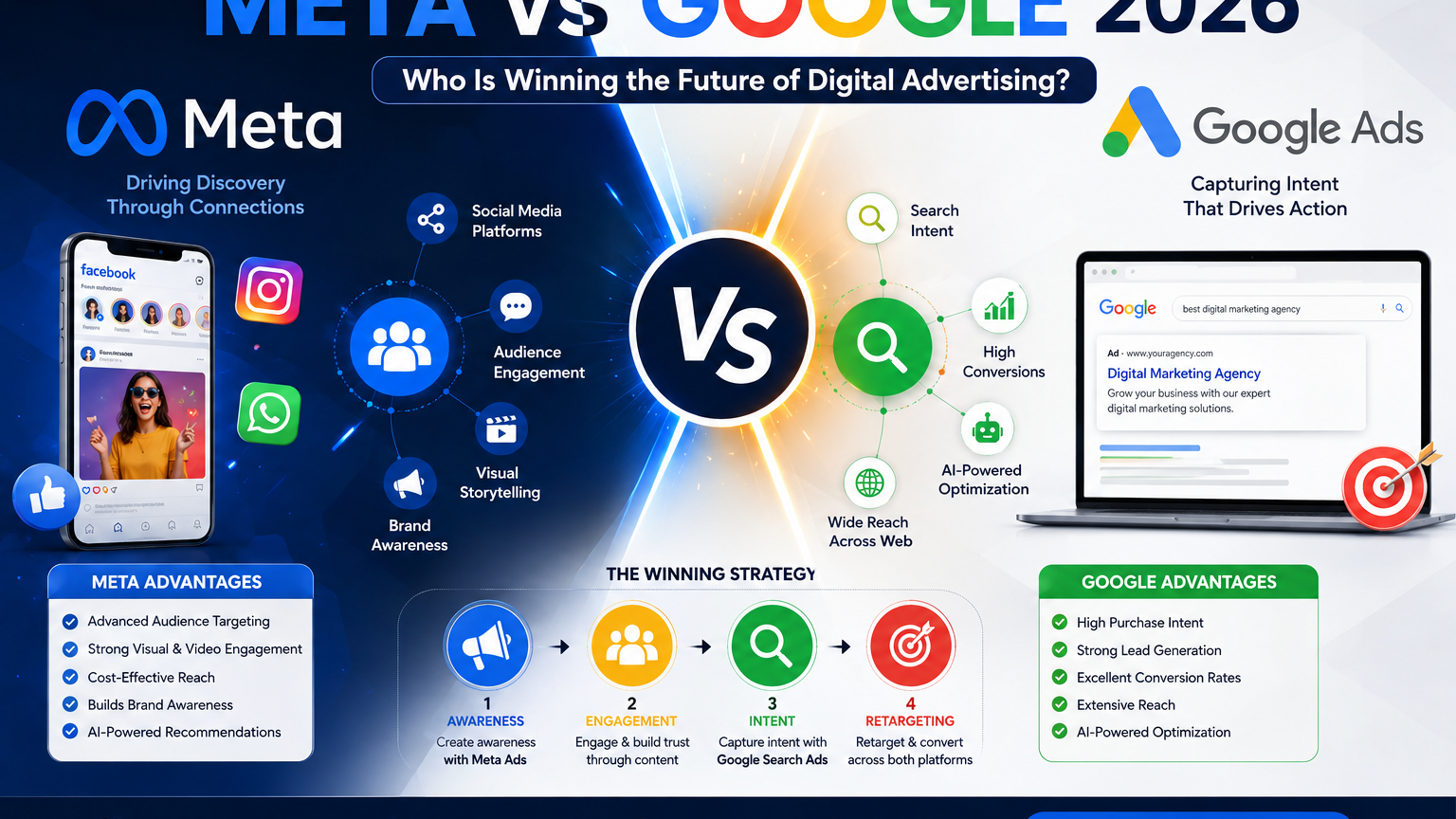
Explore the battle between Meta and Google in 2026. Learn how AI, digital advertising, Google Ads, and Meta Ads are shaping the future of marketing…

Meta has secured new AI computing agreements with Crusoe to access approximately 1.6 gigawatts of data center capacity in Texas and Missouri. The…
Our team can help you put these ideas to work — from AI creatives to the systems behind them.