
Holiday Season Cyber Threats: 6 Ways Businesses Can Stay Protected
Protect your business from holiday season cyber threats with 6 practical tips to secure websites, online payments, employee accounts, and customer…

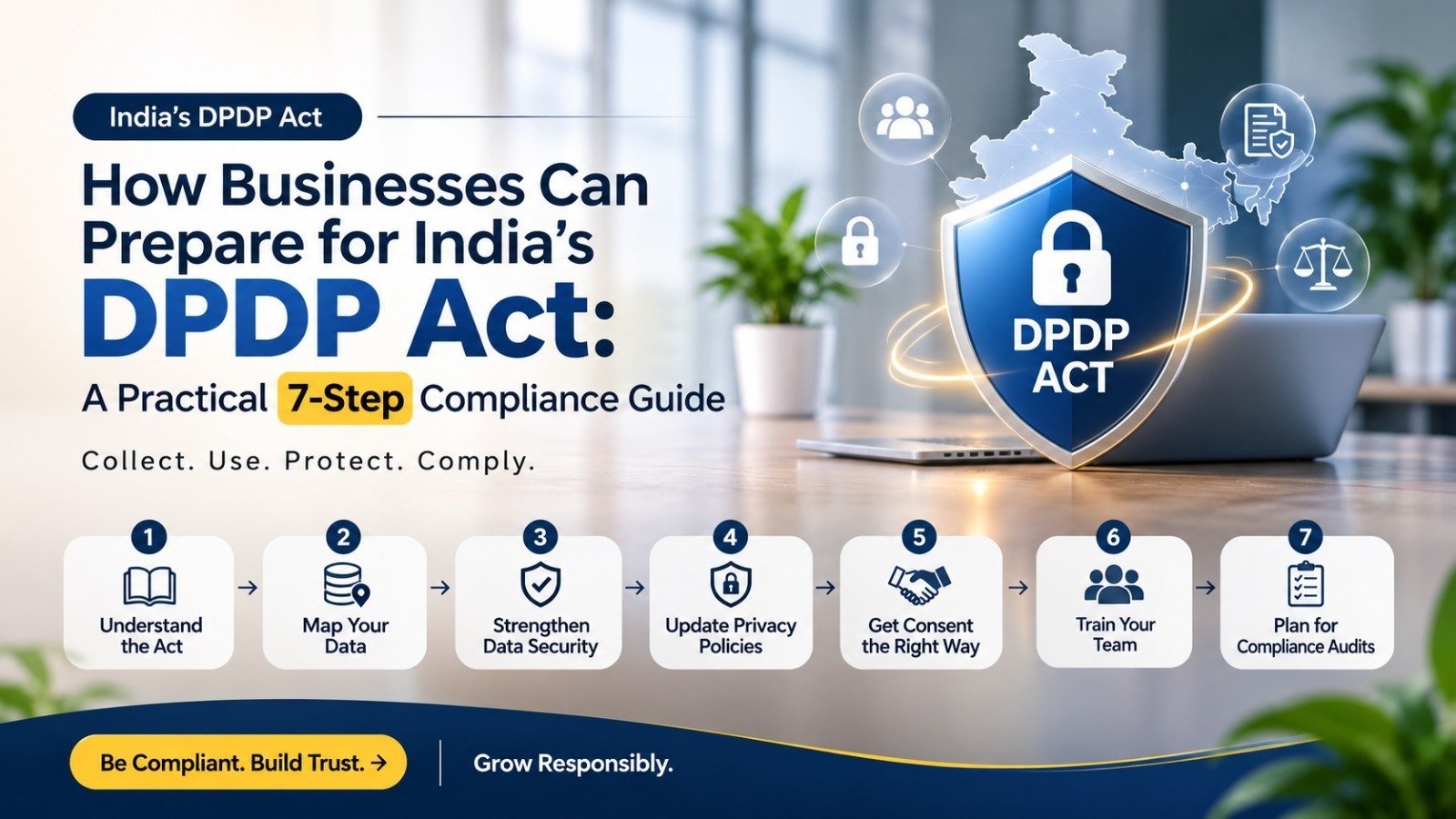
Learn how Indian businesses can prepare for DPDP Act compliance with 7 practical steps covering consent, data security, user rights and privacy management.
What Is India's DPDP Act?
Every app, website and online form collects personal data, and India now has a law that governs how it must be handled. The DPDP Rules were notified in November 2025 and are being rolled out in phases. The second phase, which introduces the Consent Manager framework, takes effect on November 13, 2026. The full compliance deadline for covered businesses is May 13, 2027. Businesses that prepare early avoid last-minute stress and build customer trust.
Here is a simple 7-step guide.
7 Steps Businesses Should Take to Prepare for DPDP Compliance
1. Identify the Personal Data Your Business Collects
List every place your business collects personal data, such as sign-up forms, mobile apps, payment pages, support chats and marketing lists. Note what you collect, why, and where it is stored.
2. Obtain Clear and Informed Consent
Ask for permission in simple language and explain why the data is needed. Avoid pre-ticked boxes and long legal text, and make it just as easy to withdraw consent as it is to give it.
3. Collect Only the Data You Need
Review every form and remove fields you do not use. Less data means less risk, and you should delete personal data once the purpose it was collected for is complete.
4. Secure Your Data and Systems
Use encryption, role-based access, strong passwords and multi-factor authentication. Keep software updated and limit who in your team can view customer data.
5. Prepare a Data Breach Response Plan
Write a simple incident response plan that says who investigates, who informs customers and authorities, and how quickly. Test it, because a clear plan reduces damage when something goes wrong.
6. Respect User Rights and Review Third-Party Vendors
People can ask to see, correct or delete their data, so set up an easy way to handle these requests. Also check your vendors, such as cloud, payment and marketing tools, to make sure they protect data properly.
7. Train Employees and Review Privacy Practices
Most privacy problems start with human error. Train employees on handling customer data, assign someone to own privacy compliance, and review your practices regularly as your business grows.
DPDP Compliance Checklist for Businesses
Map all personal data you collect
Use clear, simple consent forms
Collect and keep only necessary data
Secure systems with access controls
Prepare a breach response plan
Set up a process for user requests and vendor checks
Train your team and review regularly
Why Data Protection Matters for Businesses
Data protection is not only about avoiding penalties. Customers are more willing to use a business that handles their information responsibly. Start with knowing your data, keep only what you need, protect it well, and build privacy into everyday work. For legal specifics, consult a qualified data protection advisor.
Keep reading

Protect your business from holiday season cyber threats with 6 practical tips to secure websites, online payments, employee accounts, and customer…

Discover how businesses can adopt passwordless login using passkeys. Follow 7 practical steps to improve security, simplify authentication and…

Discover today's Indian stock market trends, top-performing sectors, market outlook, and key investment insights driving Nifty and Sensex in 2026.
Our team can help you put these ideas to work — from AI creatives to the systems behind them.