
Low-Code vs. No-Code: How Businesses Can Choose the Right Approach in 7 Steps
Discover how businesses can use low-code and no-code platforms effectively with this 7-step guide covering platform selection, automation, security…

Learn how businesses can build and launch high-quality mobile apps with this practical 7-step guide covering app design, performance, security, testing and continuous improvement.
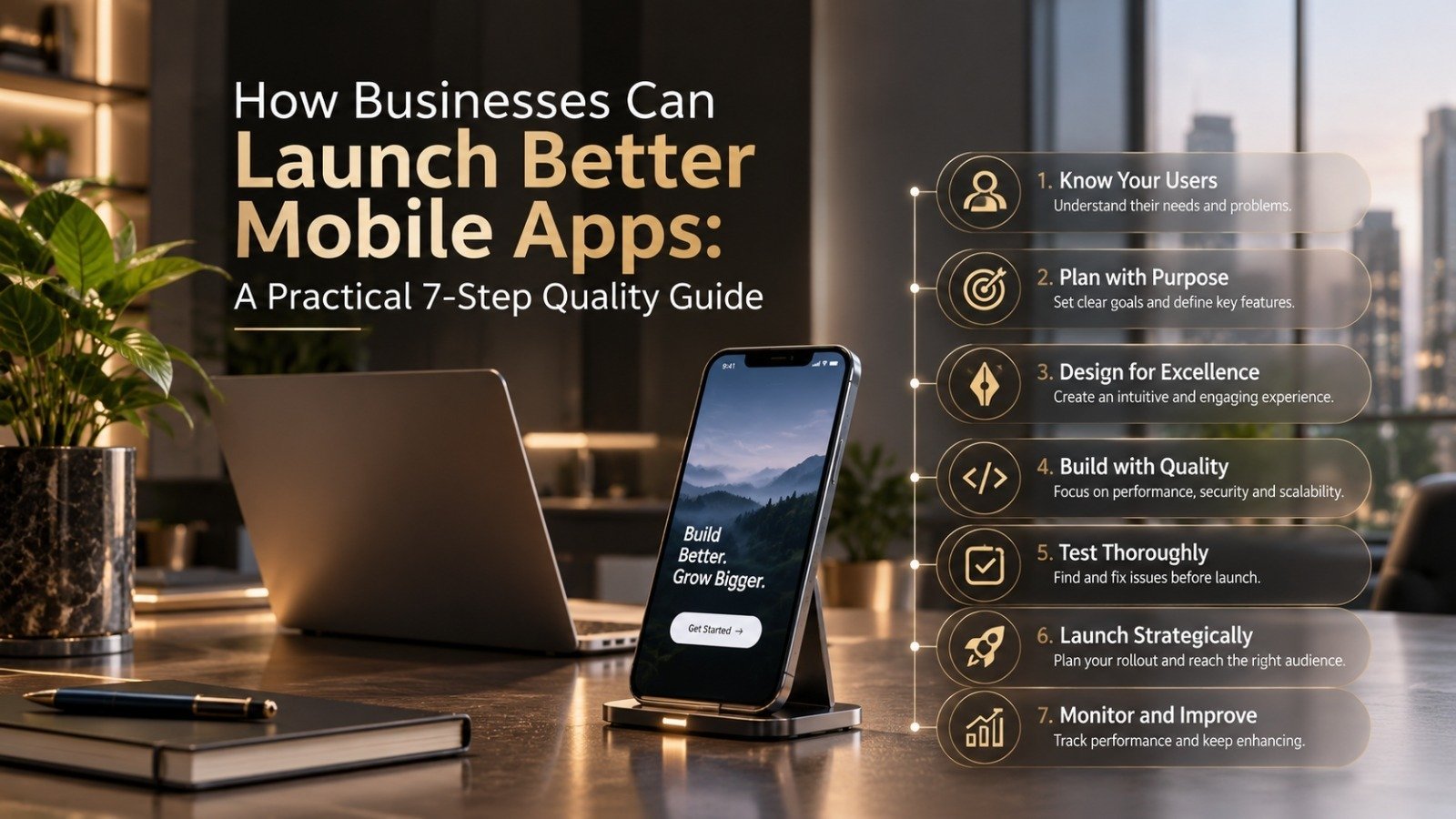
Most people delete an app within minutes if it crashes, loads slowly or feels confusing. For businesses, a mobile app is often the first and most frequent point of contact with customers, so quality directly affects retention and reputation. Great apps are not built by luck. They are built with a clear process. Here is a simple 7-step guide.
1. Add business goals and measurable objectives.
Before design or coding, decide who the app is for and which problem it solves. A focused app that does a few things well beats one packed with features nobody uses.
2. Include mobile app user experience (UX).
Users should understand what to do within seconds. Use clear navigation, readable text, and familiar patterns for login, search and payments. Every extra step in a key journey costs you users.
3. Mention app speed and performance optimization.
Slow loading is one of the biggest reasons users leave. Optimise images, reduce unnecessary network calls, and make sure the app works smoothly on average phones and weak internet connections, not just on the latest devices.
4. Explain device and OS compatibility testing.
Apps behave differently across phone models, screen sizes and operating system versions. Test on a mix of real devices, and cover everyday situations such as low battery, poor network, interrupted payments and switching between apps.
5. Include data protection and privacy compliance.
Protect login, payments and personal data with encryption and secure sessions. Collect only the information you truly need, and explain clearly how it is used.
6. Emphasize automated and regression testing.
New features can break old ones. Run regression tests before each update, track bugs clearly with steps to reproduce them, and fix critical issues before launch, not after reviews turn negative.
7. Include app analytics and user retention.
After launch, monitor crash reports, ratings and feedback. Release small, regular updates instead of rare big ones, and let real user behaviour guide what you improve next.
Mobile App Quality Checklist
Clear purpose and target users
Simple, easy-to-follow design
Fast performance on average devices
Tested on real devices and networks
Secure login, payments and data
Regression testing before every release
Regular updates based on user feedback
Final Thoughts: Quality Is What Keeps Users
Downloads may bring users in, but quality is what makes them stay. The best apps are simple, fast, secure and tested thoroughly before they reach customers. Start with a clear purpose, test early and often, and keep improving based on what real users tell you
Keep reading

Discover how businesses can use low-code and no-code platforms effectively with this 7-step guide covering platform selection, automation, security…

Edge Computing, IoT, and Edge AI are reshaping the future of connected technology by bringing intelligence closer to data sources. Discover their…

Quantum computing is emerging as one of the most transformative technologies of the decade. Learn how quantum systems work, why businesses are…
Our team can help you put these ideas to work — from AI creatives to the systems behind them.