
How AI Agents Are Transforming Business Operations in 2026
Explore how AI agents are reshaping businesses in 2026 with intelligent automation, data-driven decisions, and enhanced customer experiences.

Multi-Cloud vs. Hybrid Cloud: Which Is Right for Your Business
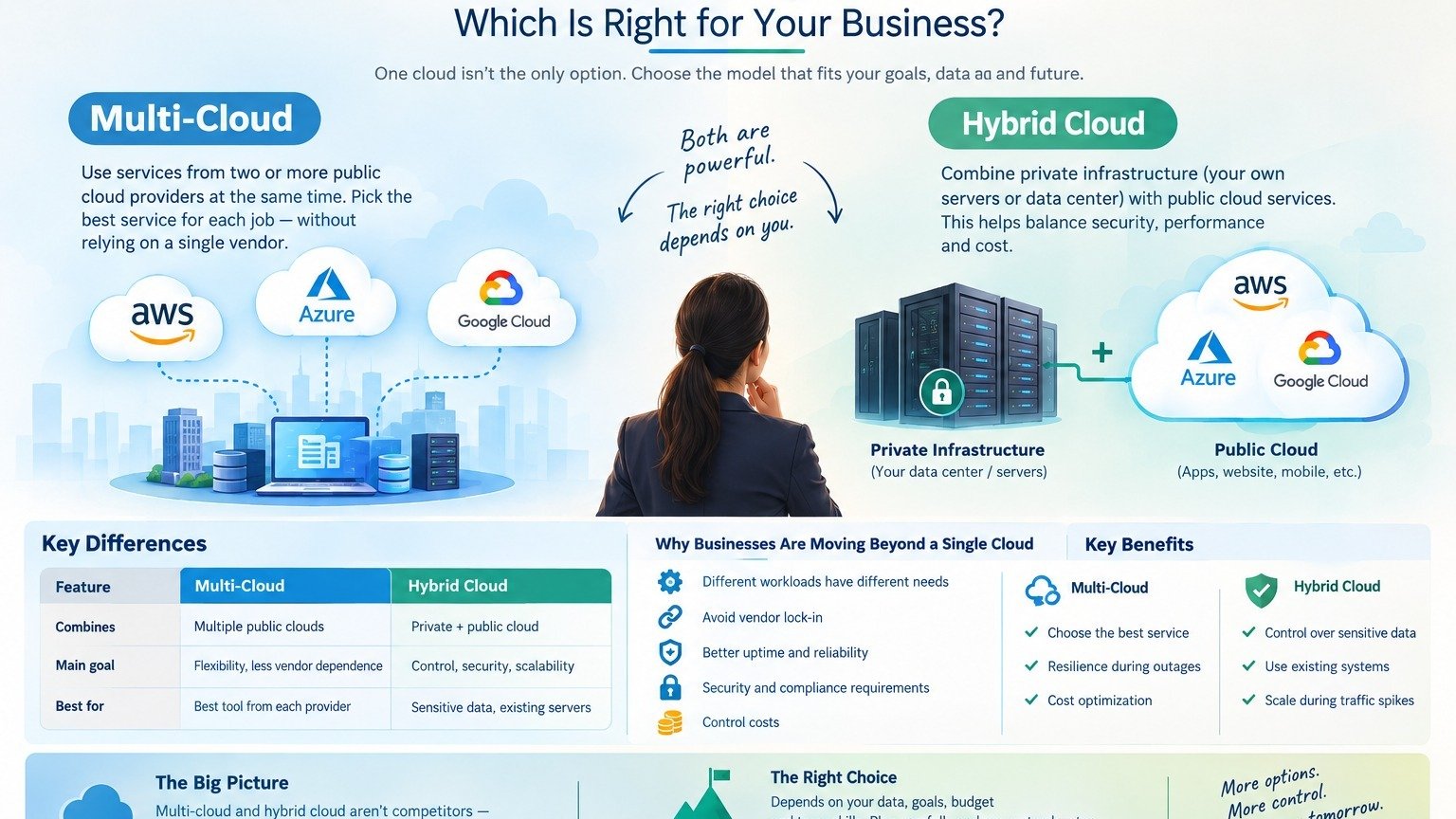
Most businesses already use the cloud. In 2026, the question is no longer “Should we use the cloud?” but “How should we use it?” For many organizations, the answer is moving beyond a single provider through multi-cloud or hybrid cloud.
What Is Multi-Cloud?
Multi-cloud means using services from two or more public cloud providers at the same time. For example, a business may host its app on one provider, store data on another, and run analytics on a third. You pick the best service for each job instead of depending on one vendor.
What Is Hybrid Cloud?
Hybrid cloud combines private infrastructure (your own servers or data center) with public cloud services. Many organizations do this to balance security, performance, and cost. For example, sensitive customer records stay on private systems while the website and mobile app run on a public cloud.
Key Differences
Multi-Cloud | Hybrid Cloud | |
Combines | Multiple public clouds | Private + public cloud |
Main goal | Flexibility, less vendor dependence | Control, security, scalability |
Best for | Best tool from each provider | Sensitive data, existing servers |
The two are not exclusive, and many businesses use both.
Why Businesses Are Moving Beyond a Single Cloud
Companies are moving beyond single-cloud deployments toward multi-cloud strategies that balance performance, cost, and resilience. Common reasons include:
Different workloads have different needs
Concern about vendor lock-in
Demand for better uptime and reliability
Security and compliance requirements
Pressure to control costs
Key Benefits
Multi-cloud: flexibility to choose the best service, resilience if one provider has an outage, and cost optimization.
Hybrid cloud: control over sensitive data, continued use of existing systems, and scalability during traffic spikes.
Recent Trends
Edge computing processes data closer to where it is generated, reducing delay.
Unified cloud governance helps organizations keep control across all their cloud environments.
Industry-specific clouds are emerging for sectors like finance and healthcare.
How to Choose
Sensitive or regulated data? Choose hybrid for more direct control.
Existing on-premise systems? Hybrid lets you build on them.
Worried about outages or lock-in? Multi-cloud spreads the risk.
Teams needing specialized tools? Multi-cloud offers more choice.
Quick rule: Hybrid if control and security come first. Multi-cloud if flexibility and resilience come first. Both if your business is large or complex.
Challenges to Consider
Complexity: More platforms need skilled people and planning.
Security gaps: More environments mean more places to protect.
Cost control: Spending across providers can grow unnoticed.
Consistent governance: Policies must apply equally everywhere.
How to Get Started
Review your current applications and data.
Define your goal: cost, security, resilience, or speed.
Set security and governance rules first.
Start with a pilot on one non-critical workload.
Monitor costs, train your team, and expand gradually.
Conclusion
Multi-cloud and hybrid cloud are two practical answers to the same question: how to get flexibility, security, and performance without relying on a single setup. The right choice depends on your data, goals, budget, and team skills. Businesses that plan carefully and move step by step will benefit most in 2026 and beyond.
Keep reading
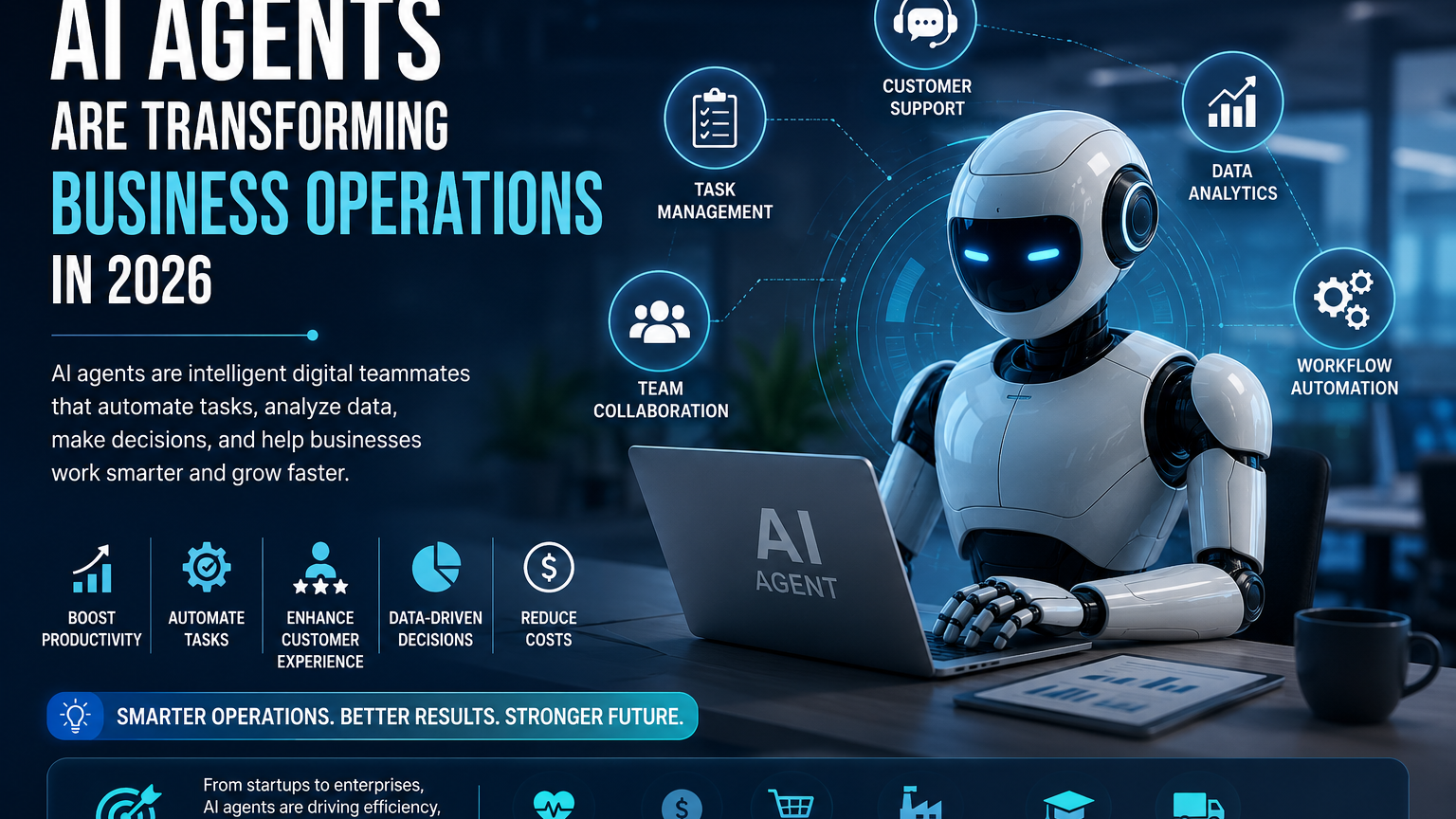
Explore how AI agents are reshaping businesses in 2026 with intelligent automation, data-driven decisions, and enhanced customer experiences.

Learn how AI agents help businesses automate tasks, enhance customer experiences, optimize workflows, and make data-driven decisions in 2026.

Learn how Generative Search Optimization (GEO) is transforming digital marketing in the age of AI-powered search. Discover strategies for building…
Our team can help you put these ideas to work — from AI creatives to the systems behind them.