
Multi-Cloud vs. Hybrid Cloud: Which Is Right for Your Business?
Multi-Cloud vs. Hybrid Cloud: Which Is Right for Your Business

Learn how AI agents help businesses automate tasks, enhance customer experiences, optimize workflows, and make data-driven decisions in 2026.

Artificial Intelligence is transforming industries at an unprecedented pace. From AI assistants and content generation tools to advanced analytics and autonomous systems, businesses and consumers are using AI more than ever before.
Behind every AI breakthrough lies a massive amount of computing power. This growing demand has sparked a global race among technology giants to build and secure AI infrastructure, particularly large-scale AI data centers.
Companies such as Meta, Microsoft, Google Cloud, and Amazon Web Services (AWS) are investing billions of dollars in data center expansion to support the next generation of AI technologies.
As AI adoption accelerates worldwide, data centers have become one of the most valuable assets in the technology industry.
Modern AI models require enormous computational resources.
Unlike traditional software applications, AI systems must process massive datasets, train complex machine learning models, and perform billions of calculations every second.
Tasks such as:
● Large Language Model (LLM) training
● AI image generation
● Real-time AI assistants
● Predictive analytics
● Autonomous systems
● Enterprise AI applications
all require high-performance computing infrastructure.
As millions of users interact with AI tools daily, the demand for processing power continues to rise.
This is one of the primary reasons technology companies are rapidly expanding their data center capabilities.
AI data centers are specialized facilities designed to handle intensive computational workloads.
Unlike conventional data centers, AI-focused facilities contain:
● High-performance GPUs
● Advanced AI accelerators
● Massive storage systems
● High-speed networking
● Efficient cooling technologies
● Large-scale power infrastructure
These facilities serve as the foundation for AI model training and deployment. Without powerful data centers, modern AI services simply would not be possible.
The competition among major technology companies has intensified significantly.
Organisations are investing heavily because AI leadership increasingly depends on infrastructure ownership.
Key objectives include:
Companies with greater computing capacity can train larger and more advanced AI models.
More infrastructure allows AI services to respond faster and handle millions of users simultaneously.
Organisations with stronger AI infrastructure can innovate faster than competitors.
As AI usage grows, infrastructure must scale accordingly.
This has transformed data centers from back-end technology assets into strategic business investments.
Leading Big Tech companies — including Meta, Microsoft, Google Cloud, and Amazon Web Services — have each made AI infrastructure a top strategic priority. Meta, for example, is investing heavily in:
● Generative AI
● AI assistants
● Recommendation systems
● Business AI tools
● AI-powered advertising
● Future AI agent technologies
To support these initiatives, Meta continues expanding its computing capacity through large-scale data center investments.
AI systems require significant processing power both during training and while serving millions of users in real time.
As competition intensifies across the AI industry, infrastructure expansion has become essential for maintaining technological leadership.
Graphics Processing Units (GPUs) have become the engine of modern AI.
Unlike traditional processors, GPUs can perform thousands of calculations simultaneously.
This makes them ideal for:
● Deep learning
● Neural network training
● AI inference
● Image processing
● Large-scale simulations
Demand for advanced AI chips has surged dramatically as organizations build larger AI models.
As a result, access to computing resources has become one of the most important factors in AI development.
One of the biggest challenges facing AI infrastructure is energy consumption.
Training and operating advanced AI systems requires enormous amounts of electricity. Large AI facilities often consume energy comparable to small cities.
This creates several challenges:
● Rising energy costs
● Sustainability concerns
● Power grid capacity requirements
● Carbon emission reduction goals
● Infrastructure planning complexity
Technology companies are increasingly investing in renewable energy projects and energy-efficient data center designs to address these challenges.
The expansion of AI infrastructure benefits businesses far beyond the technology sector.
Organizations can leverage AI-powered services for:
AI chatbots and virtual assistants improve response times and customer satisfaction.
AI helps businesses analyze customer behavior and optimize campaigns.
Organizations gain faster insights from large datasets.
AI accelerates coding, testing, and deployment processes.
Automation reduces repetitive tasks and improves productivity.
As AI infrastructure grows, businesses gain access to more powerful and affordable AI solutions.
Data center investments create significant economic opportunities.
Benefits include:
● Job creation
● Construction projects
● Technology innovation
● Local economic growth
● Increased demand for skilled professionals
Regions that attract major data center investments often experience substantial economic development.
This is one reason governments and local authorities actively support large-scale technology infrastructure projects.
Despite strong investment, several challenges remain.
Demand for AI chips often exceeds supply
Building AI-ready facilities requires billions of dollars.
Power availability has become a critical factor in data center planning.
Organizations must balance innovation with sustainability goals.
Managing advanced AI infrastructure requires highly skilled engineers and specialists.
Addressing these challenges will be crucial for maintaining AI growth over the coming years.
The next generation of AI infrastructure will likely focus on:
● More efficient computing architectures
● Renewable energy integration
● Edge AI infrastructure
● Advanced cooling technologies
● AI-optimised hardware
● Sustainable data center operations
As AI continues evolving, infrastructure investments will remain a major priority for technology companies worldwide.
Experts expect global spending on AI infrastructure to increase significantly throughout the remainder of the decade.
Even companies that do not develop AI systems directly will be affected by these investments.
Improved AI infrastructure means:
● Better AI tools
● Faster cloud services
● More affordable AI solutions
● Enhanced business productivity
● Increased innovation opportunities
Organisations that understand these developments can better prepare for future technological changes and gain competitive advantages through AI adoption.
From advanced GPUs and massive storage systems to energy-efficient facilities and scalable cloud platforms, these investments are laying the foundation for the next generation of AI technologies.
Businesses, governments, and consumers will all benefit from the continued expansion of AI infrastructure as it enables faster innovation, smarter applications, and new opportunities across virtually every industry.
Keep reading
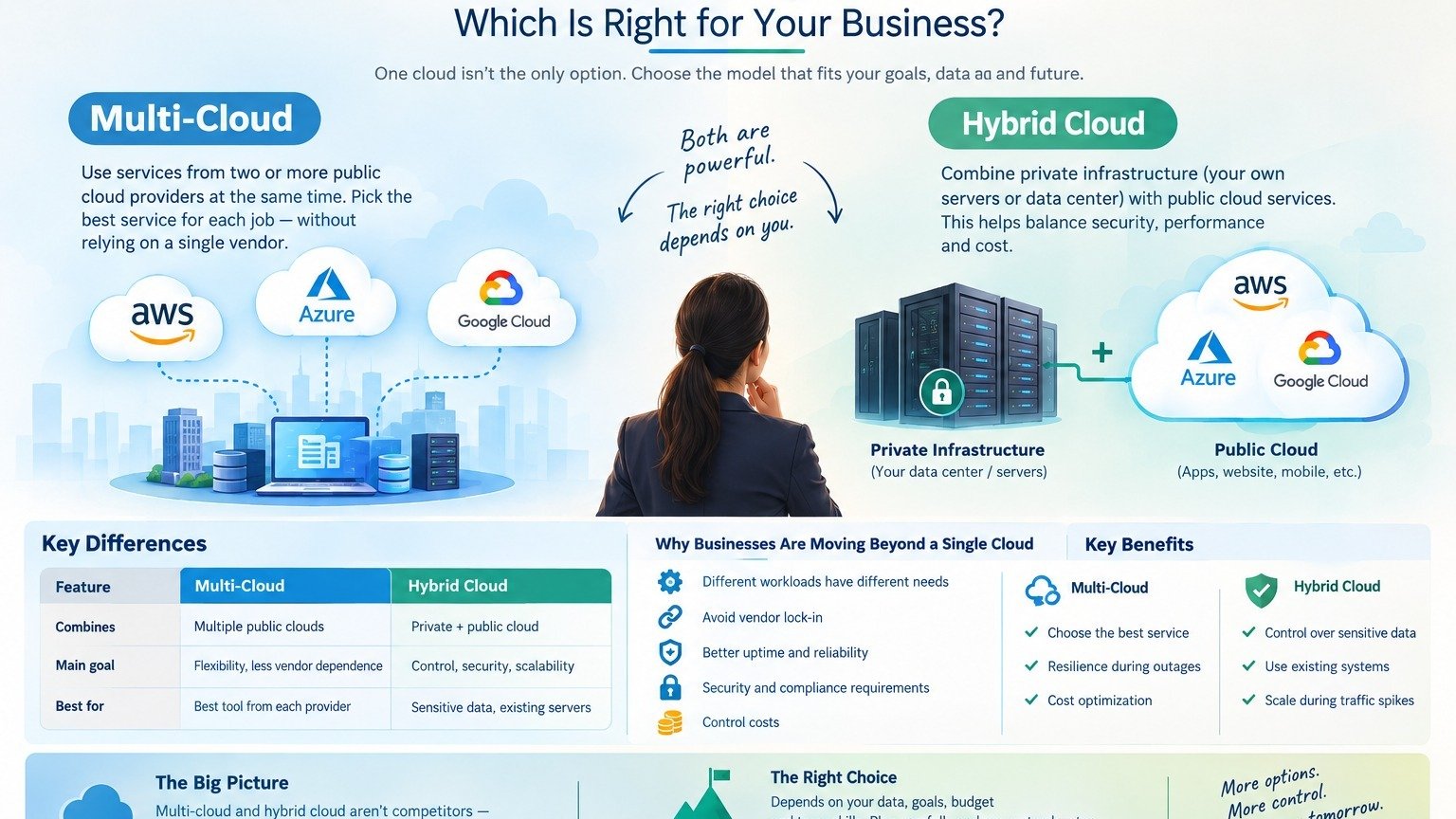
Multi-Cloud vs. Hybrid Cloud: Which Is Right for Your Business
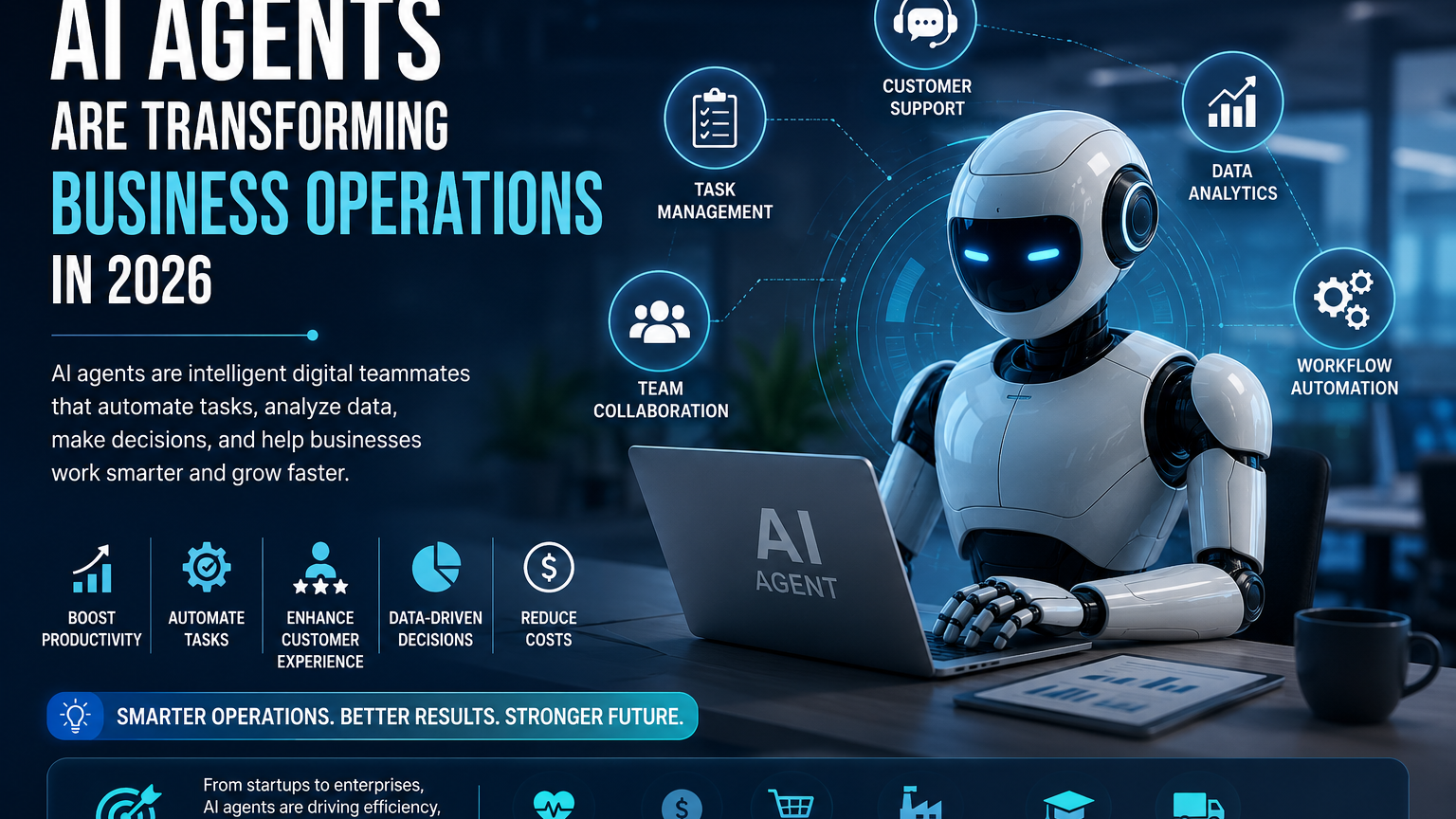
Explore how AI agents are reshaping businesses in 2026 with intelligent automation, data-driven decisions, and enhanced customer experiences.
Learn how Generative Search Optimization (GEO) is transforming digital marketing in the age of AI-powered search. Discover strategies for building…
Our team can help you put these ideas to work — from AI creatives to the systems behind them.